A tournament is only as good as its draw. You can have the best tables, the best lighting, and the best coffee, but if the #1 and #2 seeds meet in the first round of the knockouts, your tournament is flawed.
Here are the 5 most common mistakes we see organizers make, and how to fix them.
1. Random Draws (The “Hat” Method)
Drawing names out of a hat feels “fair” because it’s random. But in sports, random is unfair. If you put the top 4 players in the same group by accident, you have eliminated 3 semi-finalists before the tournament really begins.
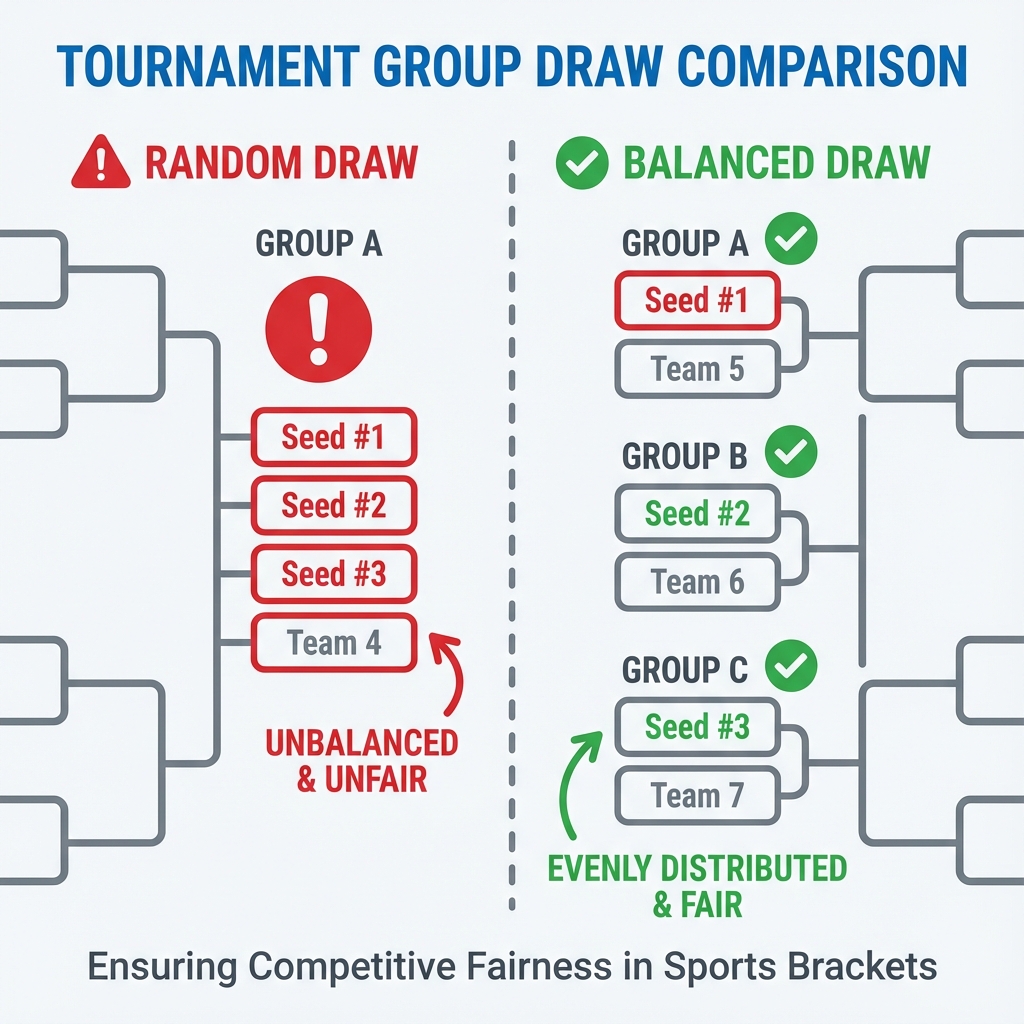
The Fix: Always seed your top players based on rating or past performance.
2. The “Group of Death”
This happens when you distribute seeds sequentially instead of “snaking”.
- Bad: Group A gets seeds 1, 5, 9. Group B gets seeds 2, 6, 10.
- Worse: Putting unseeded strong players (“floaters”) all in one group. The Fix: Use Snake Seeding.
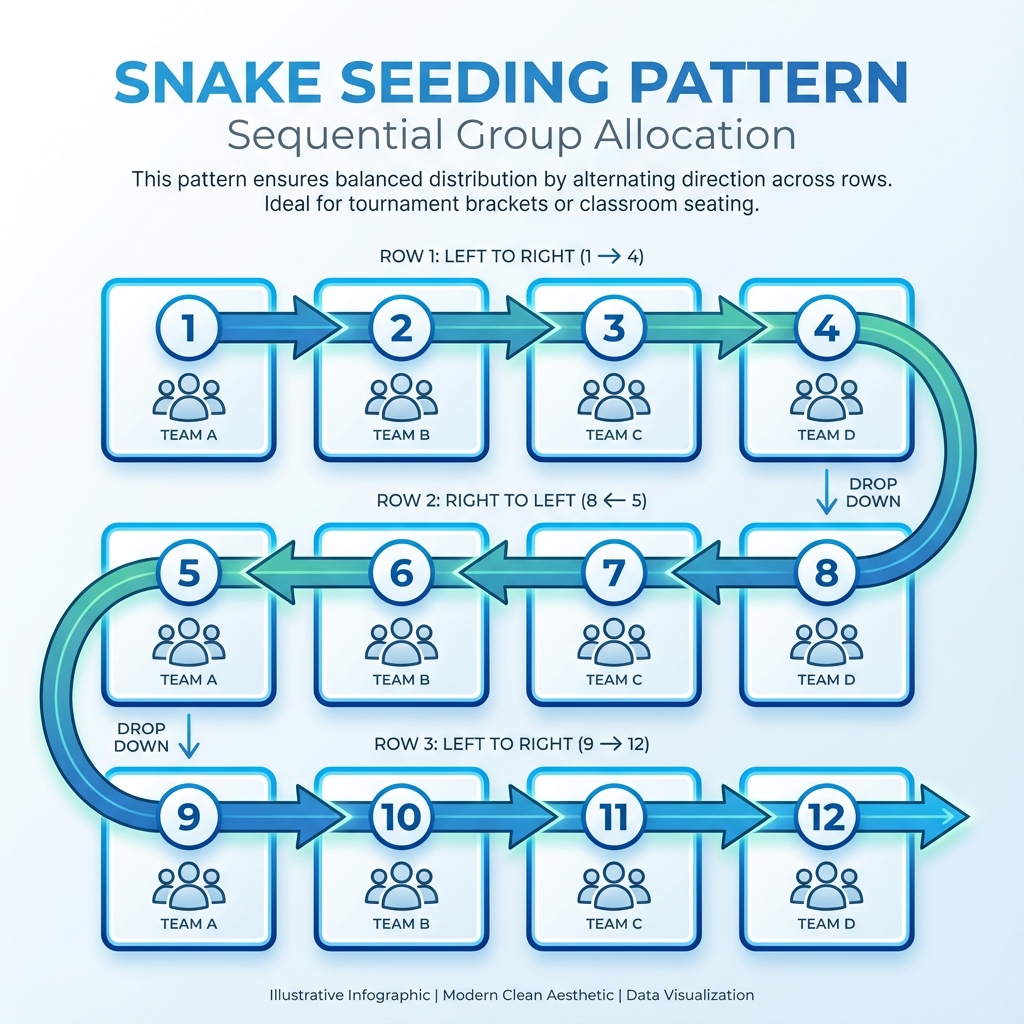
- Group A: 1, 8, 9, 16
- Group B: 2, 7, 10, 15 TourneyPilot does this automatically.
3. Manual “Fixing”
It’s tempting. “Oh, Dave and Steve practice together, I’ll move Steve to Group C.” Every manual swap you make ripples through the draw, often creating a new imbalance elsewhere. It also opens you up to accusations of bias. The Fix: Set rules (e.g., “Separate by Club”) over individual swaps. Let the algorithm enforce the rule impartially.
4. Failing to Re-Seed
It’s 10 minutes before start time. The #3 Seed calls in sick. Most organizers just cross their name out. This leaves a “hole” in the draw and gives an easy path to a lower-ranked player. The Fix: You must re-shuffle the seeds below #3. The old #4 becomes #3, and so on. In software like TourneyPilot, this is a distinct “Withdraw & Re-seed” action that keeps the draw valid.
5. Ignoring “Separation by Club”
In local tournaments, half the players might come from two big clubs. There is nothing more boring than driving an hour to a tournament, only to play the same guy you play every Tuesday night. The Fix: A good seeding algorithm should treat “Club” as a constraint. It will try to place clubmates in different groups or opposite halves of the draw whenever possible.
Conclusion
Seeding is math, not magic. By using a system that understands Snake Seeding and Separation constraints, you ensure that the finals are contested by the players who truly earned their spot.